Asparagus
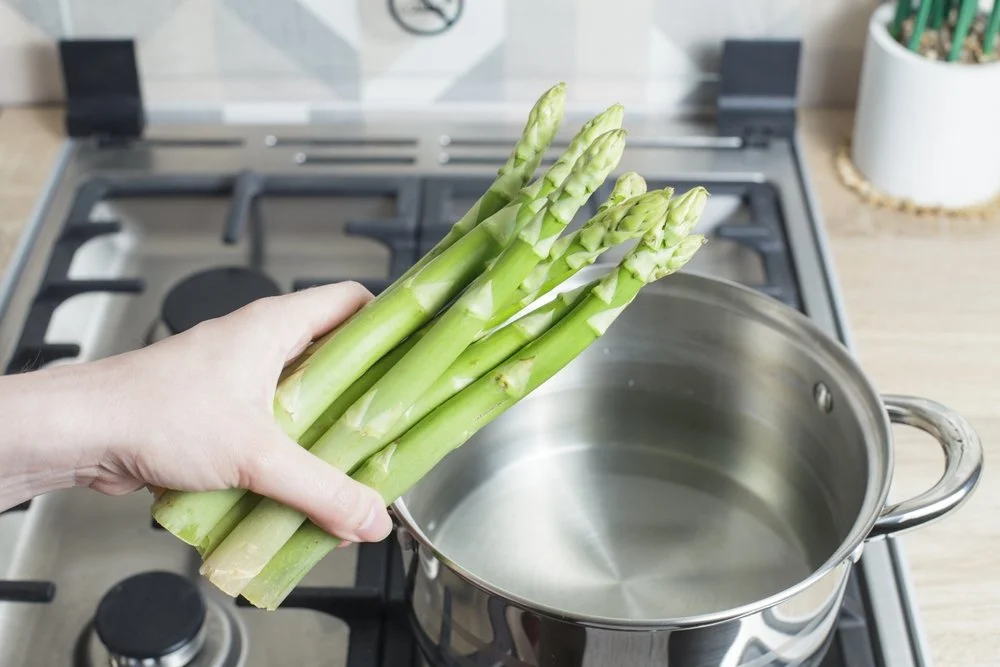
Cooking methods for asparagus
Asparagus is one of the most versatile vegetables in the kitchen—its flavor shifts from bright and grassy to deep and nutty depending on how you treat it. The key is matching the method to the texture and flavor you want.
Cook asparagus quickly over medium-high heat and remove it while still bright green and slightly firm keeping it crisp-tender rather than mushy. Watch for visual cues: the color should stay vibrant, and the stalks should bend slightly but not go limp. When in doubt, undercook slightly—residual heat will finish the job without sacrificing texture.
Choosing the Right Method
For bold flavor: roast or grill
For elegance and speed: sauté
For freshness: blanch or steam
For indulgence: butter-braise or poach
Roasting (Concentrated, Nutty Flavor)
Roasting transforms asparagus by driving off moisture and caramelizing its natural sugars. High heat (400–425°F) creates slightly crisp tips and a tender interior. This is one of the best methods for depth of flavor—perfect when paired with citrus, cheese, or a finishing salt.
Sautéing (Quick & Elegant)
Sautéing cooks asparagus quickly in a hot pan with butter or oil, preserving its bright color and giving it a light, glossy finish. This method allows for layering flavors—garlic, shallots, citrus zest, or spices like cardamom—making it ideal for refined, restaurant-style dishes.
Blanching (Fresh, Crisp-Tender)
Blanching involves briefly boiling asparagus in salted water, then shocking it in ice water to stop the cooking process. Blanch no more that 2 minutes for 3/8 inch stalks. This locks in its vivid green color and keeps the texture crisp-tender. It’s perfect for salads, chilled dishes, or when you want a clean, fresh taste without added richness.
Grilling (Smoky & Charred)
Grilling adds a smoky, slightly bitter char that complements asparagus’s natural sweetness. Toss lightly in oil and place directly on the grill or a grill pan. This method shines in spring and summer cooking and pairs beautifully with meats or bold vinaigrettes.
Steaming (Clean & Delicate)
Steaming gently cooks asparagus while preserving nutrients and its natural flavor. The result is tender but not soft, with a pure, slightly sweet taste. This is a great option when you want a lighter, health-forward preparation.
Poaching or Butter-Braising (Luxurious & Tender)
Cooking asparagus slowly in butter or a light broth creates an incredibly tender texture and a silky finish. This method leans into richness and works well for more elevated dishes, where asparagus becomes the centerpiece.